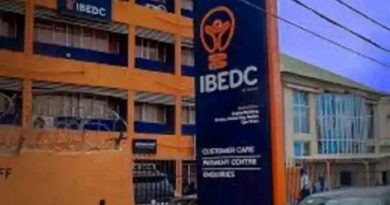

Festive Darkness and Monthly Exploitation: Festive Season Power Outages and the Failure of Service Delivery by IBEDC | Anonymous
The Christmas and New Year season is meant to be a time of light, joy, and renewal.
Yet, for countless residents under the Ibadan Electricity Distribution Company (IBEDC), the 2025 festive period was defined by darkness, disappointment, and institutional failure.
At a time when electricity demand is both predictable and essential, IBEDC once again demonstrated an alarming level of ineptitude and incapacity that exposes its unfitness to manage a critical public service.
Power outages during festive seasons are not acts of God; they are failures of planning, management, and responsibility. Christmas and New Year come every year.
A competent electricity distribution company prepares ahead, strengthening infrastructure, managing load, and communicating transparently with customers. IBEDC did none of these effectively.
Instead, customers were abandoned in darkness, with no meaningful explanation and no sense of urgency from a company entrusted with their welfare.
Even more offensive than the blackout itself is IBEDC’s predictable end-of-month ritual: the issuance of outrageous and unjust electricity bills that insult reason and fairness.
After weeks of darkness, customers are still presented with estimated bills that bear no relationship to actual power supply or consumption. This practice is not just inefficient, it is exploitative.
Reasonable minds cannot comprehend how a company that failed to supply electricity for days or weeks can, at month’s end, demand inflated payments as if uninterrupted service was rendered.
This pattern exposes a business model built not on service delivery, but on billing aggression, where customers are forced to pay for darkness.
A Culture of Non-Transparency and Zero Accountability
IBEDC’s conduct reveals a deeper problem: transparency and accountability are not part of its operational culture.
Communication during outages is poor or nonexistent. Complaints go unanswered.
Customer service mechanisms appear cosmetic rather than functional. There is no clear explanation, no apology, and no visible effort to compensate customers for losses suffered.
In any serious utility sector, such behavior would trigger consequences. Under IBEDC, it has become normalized.
IBEDC does not operate in isolation. It functions under licenses issued and regulated by the Federal Government through its agencies. This makes the government a silent partner in failure.
When a company consistently demonstrates incapability, failing to provide electricity during critical periods while continuing to issue unjust bills, the logical regulatory response should be license review or outright revocation.
That this has not happened sends a troubling message: that consumer suffering is tolerated, inefficiency is rewarded, and accountability is optional.
The continued operation of IBEDC in its current form raises serious questions about the government’s commitment to protecting citizens and enforcing standards in the power sector.
The impact of IBEDC’s failures is real and painful. Small businesses lost income. Families spent scarce resources on fuel.
The festive season, already difficult for many due to economic pressures, was made worse by a utility company that failed at the most basic level.
Electricity is not a privilege; it is a public necessity. Any company that cannot deliver it reliably, fairly, and transparently has no justification for continued control over consumers’ lives.
By plunging customers into darkness during Christmas and New Year, and then compounding the injury with unjust monthly bills, IBEDC has shown not just incompetence, but institutional disrespect for the public it serves. Its actions reflect a system where opacity thrives, accountability is absent, and consumers are powerless.
Until decisive action is taken,by regulators and the Federal Government alike, IBEDC will remain a symbol of how failure is tolerated and inefficiency protected in Nigeria’s electricity sector. The people deserve better.
Darkness, exploitation, and silence cannot continue to be the price of a licensed monopoly.