OYRTMA Rejects ‘Cut-Throat’ Fines Claim, Says Penalties Save Lives
The Oyo State Road Traffic Management Authority (OYRTMA) has rejected claims that its fines are “cut-throat” and place an undue burden on motorists, saying the penalties are necessary to deter dangerous driving and save lives on the state’s roads.
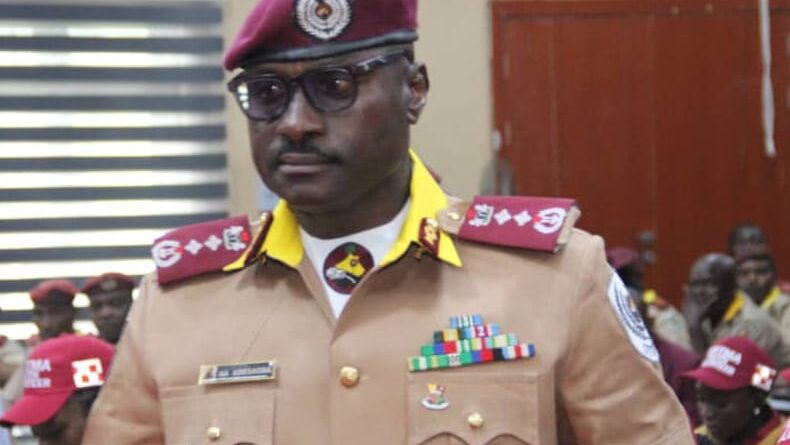
The Executive Chairman of the Authority, Major Adesagba Adekoya (rtd), stated this in response to an article by Maroof Asudemade titled, “OYRTMA’s ‘Cut-Throat’ Fines: Makinde’s Government Piles More Burden on Struggling Motorists.”
The OYRTMA chairman said traffic fines were not merely an economic matter but “first and foremost, a matter of life and death”, stressing that the penalties were intended to deter conduct that had cost Oyo State hundreds of lives and left many families with permanent disabilities.
He faulted the article’s comparison of OYRTMA fines with those of the Federal Road Safety Corps (FRSC), describing it as “deeply flawed”.
According to him, the FRSC fine schedule cited in the article is rooted in the FRSC (Establishment) Act, 2007, and the National Road Traffic Regulations 2012, with fines such as ₦2,000 for seatbelt violations, ₦3,000 for wrongful overtaking and ₦4,000 for mobile phone use having remained unchanged for decades.
He said the Senate had passed an amendment to the FRSC Act in 2026, proposing increases of up to 300 per cent in some fines, with penalties for driving under the influence of alcohol and speed-limit violations rising from ₦5,000 to ₦100,000. He said the amended Act was awaiting presidential assent, while OYRTMA reviewed its fines in June 2025 to make them a genuine deterrent.
The Chairman also compared OYRTMA’s fines with those of peer agencies in other South-West states, which according to him, the Lagos State Traffic Management Authority (LASTMA), under the Lagos State Transport Sector Reform Law, 2018, prescribes up to three years’ imprisonment for driving against traffic, ₦100,000 for driving under the influence, ₦50,000 for driving on restricted routes, and ₦50,000 each for dangerous and reckless driving.
He added that LASTMA had also ordered mandatory psychiatric evaluations for motorists caught driving against traffic, while also, the Ogun State Traffic Compliance and Enforcement Agency (TRACE), which is responsible for traffic management and enforcement in Ogun State, also uses measures such as vehicle impoundment, fines, community service, mandatory psychiatric tests for certain route violations and prosecution of offenders.
He said OYRTMA’s fines were in line with, and in some cases lower than, those of its peers, noting that its ₦10,000 fine for wrongful overtaking was significantly lower than Lagos State’s ₦50,000 fine for reckless driving.
Citing road crash data, Major Adekoya (Rtd) said the FRSC recorded 304 crashes in Oyo State in 2024, resulting in 222 deaths and 779 injuries. He also recalled that 146 persons died in road traffic crashes in the state between January and June 2023, while the Oyo State Police Command recorded 351 deaths from 751 auto accidents between January and September of the same year.
He added that OYRTMA’s records showed 195 deaths and 643 injuries from road crashes in the state in 2025.
The chairman cited specific incidents, including the June 24, 2025 multiple crash at Sanyo on the Ibadan-Lagos Expressway involving seven vehicles and claiming five lives. He said the crash was attributed to speeding, wrongful overtaking and loss of control.
He also mentioned a February 2026 incident in which a fuel-laden truck trapped a commercial Nissan Micra against a beverage truck at Iwo Road, Ibadan. He recalled that in December 2024, OYRTMA arrested 1,079 traffic offenders, while seven fatalities, including a nursing mother, were recorded along the Iwo Road-Ojoo stretch of the Lagos-Ibadan Expressway.
“The fine is not the punishment; the fine is the warning. The punishment is the funeral. The punishment is the permanent disability. The punishment is the child who will never see her mother again,” He said.
He rejected suggestions that OYRTMA operates as an arbitrary fining machine, pointing to the Traffic Violation Tribunal constituted by the Oyo State Rule of Law Enforcement Authority (OYRLEA).
He said the tribunal, which commenced sitting in September 2024, is a court of record where offenders are given a fair hearing. In its first session, he said, 27 cases were treated, with some offenders found guilty and fined, while others were discharged without fines.
From September 2024 to July 2025, Adekoya said OYRLEA tribunals tried no fewer than 6,000 traffic offenders and 3,000 environmental offenders.
He added that counsel were available to defend suspects, who could also apply for bail depending on the nature of the offences, while the tribunal collaborates with the Nigerian Bar Association and the Legal Aid Council to ensure access to legal representation.
The OYRTMA Chairman also stressed that the purpose of a fine was deterrence, not revenue generation. Quoting the Road Safety Toolkit developed by the International Road Assessment Programme (iRAP), he said road rules were more likely to be obeyed when road users believed that non-compliance would result in detection and consequences such as fines or licence cancellation.
He argued that a ₦2,000 fine for failing to wear a seatbelt, an offence he said accounts for 35 per cent of fatal road crashes, was not sufficient deterrence but a minor inconvenience. A ₦10,000 fine, he said, was more likely to make a driver reconsider such behaviour.
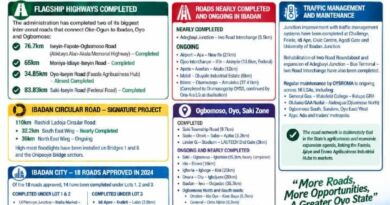
“The goal of OYRTMA is compliance, not punishment,” he said, adding that the Oyo State Government under Governor Seyi Makinde had invested in infrastructure, public enlightenment and road safety campaigns, with fines serving as a last resort.
“OYRTMA is not an enemy of the motorist. We are the protectors of the motorist. Every fine we impose is a life we are trying to save. Every offender we bring before the tribunal is a potential crash we are trying to prevent,” he said
He invited the author to visit the tribunal and observe its proceedings, insisting that OYRTMA was “not a cut-throat agency” but “a life-saving agency” committed to protecting lives on the state’s roads.