Ewenla Urges Nigerians to Preserve Distinction Between Royal Lineage and Chieftaincy
…Says Prince, Princess Titles Are Rooted in Ancestry, Not Honorary Recognition
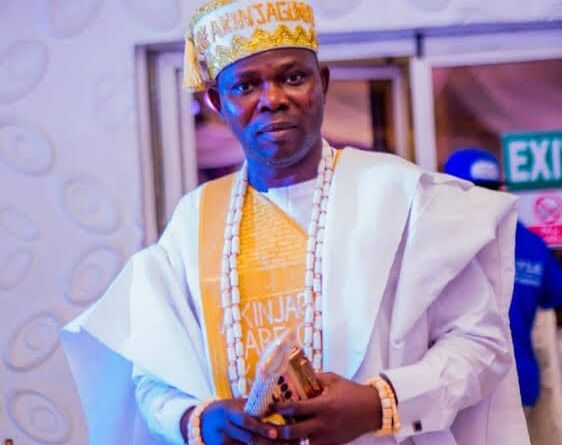
The Akinjagunla Aare Ona Kakanfo of Yorubaland, Prince Adedipe Ewenla has called for greater understanding and preservation of the distinctions between royal lineage, ruling houses, chieftaincy titles and honorary recognition in Yoruba traditional institutions.
Ewenla, who is also an Ambassador for African Culture and Traditions, made the call in a statement on royal lineage, princes, princesses and the sanctity of Yoruba tradition.
He explained that the designations “Prince” and “Princess” are traditionally associated with royal ancestry and membership of recognised royal families or ruling houses, stressing that they are fundamentally different from chieftaincy titles conferred on individuals in recognition of their contributions to a community.
According to him, being installed as a chief for service, achievement or community contribution does not automatically make such an individual a Prince or Princess, just as receiving an honorary, professional or traditional title does not create royal ancestry.
Ewenla said royal lineage is a matter of heritage and ancestry, while chieftaincy remains a traditional institution governed by the customs and procedures of individual communities.
He noted that in many Yoruba communities, kingship is historically connected to recognised ruling houses and royal families, which preserve genealogical links to traditional institutions and, where customary laws provide, produce candidates for succession.
The cultural ambassador, however, acknowledged that the rules governing royalty and succession differ among Yoruba communities and traditional institutions, urging people to consider established family lineage and the customs of the particular royal institution when discussing royal status.
Ewenla stressed that his position was not intended to diminish people who are not from royal families, saying individuals could attain distinction through leadership, entrepreneurship, professional achievement, philanthropy, scholarship, politics and legitimate traditional chieftaincy.
He urged those without recognised royal ancestry or membership of ruling houses not to adopt the designations Prince or Princess merely for prestige, social status or personal branding.
He warned that confusing honorary recognition and chieftaincy with hereditary royalty could make it difficult for future generations to distinguish between royal lineage, ruling houses, chieftaincy institutions, honorary recognition and personal achievement.
Ewenla further emphasised that royal heritage should not be regarded as a mark of superiority, noting that being born into a royal family does not make anyone superior to others, just as not being born into one does not make an individual inferior.
He called on holders of royal identities to respect the people, preserve family histories, uphold cultural values and contribute positively to society.
Ewenla urged Nigerians, particularly those interested in Yoruba culture, to learn, understand and preserve the institutions, customs, names, lineages and traditions inherited from their ancestors.
He stated: “Royal blood is inherited. Chieftaincy is conferred according to custom. Achievement is earned. Respect is demonstrated.”