Court fixes May 8 to Hear Suit Seeking to Disqualify Jonathan From 2027 Presidential Race
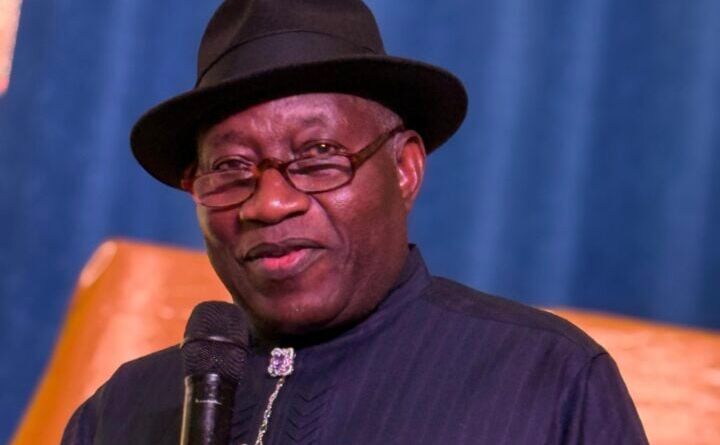
A federal high court in Abuja will on Friday hear a suit seeking to restrain Goodluck Jonathan, the former president, from contesting the 2027 presidential election.
On April 28, Peter Lifu, the presiding judge, ordered that hearing notices be issued and served on the defendants, who were yet to file their responses.
The suit was filed by Johnmary Jideobi, a lawyer, who is asking the court to declare Jonathan constitutionally ineligible to seek the presidency again.
Jideobi prayed the court to issue an order restraining Jonathan from presenting himself to any political party as a candidate for the 2027 election.
He also sought an order barring the Independent National Electoral Commission (INEC) from accepting or publishing Jonathan’s name as a presidential candidate.
Jonathan is listed as the first defendant in the suit marked FHC/ABJ/CS/2102/2025, while INEC and the attorney-general of the federation (AGF) are joined as second and third defendants, respectively.
The plaintiff asked the court to determine “whether in view of the combined provisions of sections 1(1), (2) and (3) and 137(3) of the 1999 Constitution, the 1st defendant is eligible, under any circumstances whatsoever, to contest for the office of the president of the Federal Republic of Nigeria”.
Jideobi argued that Jonathan had exhausted the constitutional limit allowed for a president, having completed the tenure of the late Umaru Musa Yar’Adua before serving another full term after the 2011 election.
In an affidavit filed in support of the suit, Emmanuel Agida, who deposed on behalf of the plaintiff, said Jonathan was sworn in as president on May 6, 2010, following Yar’Adua’s death a day earlier.
Agida said reports of Jonathan’s alleged interest in the 2027 election prompted the legal action.
“That the plaintiff believes that the 1st defendant, having completed the unexpired term of late President Yar’Adua and subsequently served a full term after the 2011 election, has exhausted the constitutional limit of two tenures as president,” the affidavit reads.
“That if the court does not intervene timeously, a political party may present the 1st defendant as its presidential candidate in the 2027 general election, thereby breaching the constitution.”
The plaintiff also argued that if Jonathan contests and wins the election, he would be taking the presidential oath for a third time.
“In the event the 1st defendant is returned as elected and sworn as the president of the Federal Republic of Nigeria in 2027, it will mark the 3rd time the 1st defendant will be taking the oath of office as the president of the Federal Republic of Nigeria,” the affidavit reads.
Agida added that the suit was filed “in the public interest, in the defence of the rule of law and accentuation of the supremacy of the Constitution, and to preserve the integrity of the Nigerian constitutional order”.