
56 Days in the Forest: Military’s Intelligence, Courage and Resilience Deliver Oriire Abductees from Captivity | Ogundele Olanrewaju
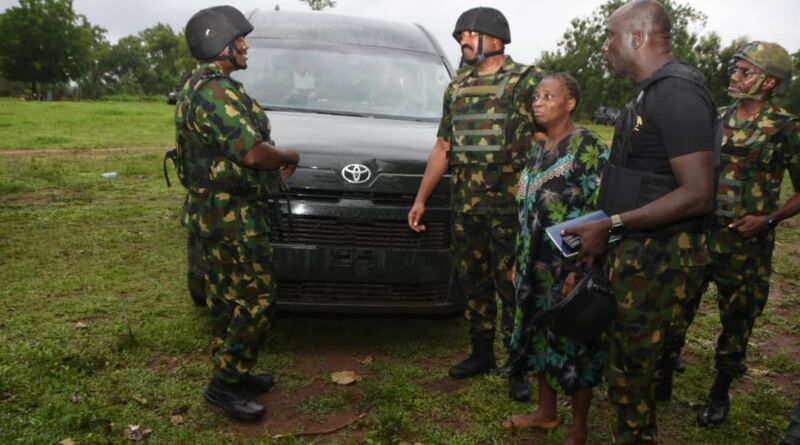
The successful rescue of the 44 pupils, teachers and principal abducted from Ahoro-Ehnsiele and Yawota communities in Oriire Local Government Area of Oyo State will remain one of Nigeria’s most remarkable security operations.
More than the return of innocent victims to their families, the mission showcased the professionalism, intelligence, discipline, resilience and inter-agency cooperation of the Nigerian military and other security agencies in confronting a dangerous criminal network.
For 56 agonising days, families waited anxiously while the victims remained deep inside a dense forest under the control of heavily armed kidnappers.
Behind the scenes, however, security personnel were engaged in a relentless battle of strategy, patience and intelligence gathering, determined to rescue the captives alive without compromising national security.
The abduction on May 15, 2026 immediately triggered a coordinated response led by the Nigerian Army.
Troops deployed to the affected communities within hours in an effort to intercept the fleeing kidnappers before they disappeared into the vast forest stretching across several states.
Although the abductors had already moved deep into the forest before troops arrived, the military refused to be discouraged.
Instead, commanders immediately redesigned their operational plans, demonstrating that successful military operations are built not only on speed but also on careful planning, adaptability and persistence.
The rescue mission quickly evolved into one of the most sophisticated intelligence-driven operations conducted in recent years.
Every available resource was mobilised, while officers carefully analysed information from multiple sources to determine the kidnappers’ movements, supply routes and hideouts.
Major General Chinedu Nnebeife, the General Officer Commanding 2 Division Nigerian Army, assumed a leading role in coordinating the operation.
His calm leadership, strategic direction and operational discipline ensured that the mission remained focused despite enormous challenges and repeated setbacks.
Understanding the complexity of the terrain, the military invited local hunters, vigilantes and the Oyo State Amotekun Corps to join the search.
Their knowledge of the forests complemented the superior tactical capabilities of the military, creating a formidable security partnership.
The Nigerian Air Force deployed surveillance aircraft and drones to support the search.
Although the thick forest canopy limited aerial visibility, commanders quickly adjusted their strategy instead of allowing the setback to weaken the operation.
That flexibility reflected one of the strongest qualities of modern military operations—the ability to adapt to changing realities.
Rather than depending solely on technology, troops embarked on painstaking ground patrols, trekking through dangerous forests for weeks in pursuit of the kidnappers.
The operation demanded extraordinary physical endurance, Soldiers covered difficult terrain under harsh weather conditions, often spending days in remote forests while maintaining operational discipline and vigilance.
The mission also demanded emotional resilience, every passing day increased public anxiety, yet the security agencies resisted pressure to abandon professional procedures or adopt reckless tactics that could have endangered the lives of the captives.
Their patience eventually proved decisive, intelligence officers gradually pieced together critical information, identifying the criminal network supporting the kidnappers and tracking collaborators operating far beyond Oyo State.
The operation expanded into a nationwide security mission involving the Office of the National Security Adviser, the National Counter Terrorism Centre, Defence Headquarters Special Forces, the Nigerian Army, Navy, Air Force, Police, Department of State Services, Nigeria Security and Civil Defence Corps, National Intelligence Agency and other specialised units.
The seamless cooperation among these agencies demonstrated the growing effectiveness of Nigeria’s multi-agency security architecture.
Instead of working independently, the agencies shared intelligence, coordinated operations and pursued a common objective.
Additional deployments from the Nigerian Air Force Tactical Operations Group in Kainji and Operation Savannah Shield in Kwara State helped seal potential escape routes, denying the kidnappers freedom of movement.
The Oyo State Police Command equally played a strategic intelligence role by arresting suspected collaborators linked to the kidnappers.
Information obtained during these investigations became valuable pieces of intelligence that strengthened the overall operation.
Investigators traced members of the criminal network across several states, including Adamawa and Kano, exposing the extensive logistics and support system sustaining the kidnappers.
Rather than merely seeking the victims’ release, security agencies systematically dismantled the criminal enterprise by disrupting communications, intercepting supplies and identifying key operatives.
One of the turning points came when security forces blocked the kidnappers’ major logistics hub at Ashamu.
Cut off from supplies and under sustained operational pressure, the criminals gradually lost their ability to sustain prolonged captivity.
Throughout the operation, the military maintained remarkable composure, despite repeated provocations and the kidnappers’ attempts to force negotiations through violence, commanders refused to compromise national security principles.
The decision not to yield to criminal demands reflected institutional discipline and strategic foresight.
Security experts have consistently argued that rewarding kidnappers often emboldens criminal groups and encourages future attacks.
The mission was not without painful sacrifices, the military lost an officer and a soldier during the operation, while other personnel sustained injuries.
Local hunters and Amotekun operatives also paid the ultimate price while assisting in the rescue efforts.
Those sacrifices highlighted the enormous risks security personnel willingly accept in defence of innocent citizens, their courage serves as a reminder that national security is often sustained through personal sacrifice and unwavering patriotism.
On July 10, after 56 difficult days, the operation achieved its ultimate objective as all 44 surviving victims regained their freedom.
Although the nation mourned the teachers who lost their lives during the ordeal, the rescue prevented what could have become an even greater tragedy.
The testimonies of the rescued victims further revealed the psychological warfare employed by the kidnappers, who repeatedly attempted to convince them that they had been abandoned by the government.
Unknown to the captives, security agencies were working tirelessly around the clock to secure their freedom.
President Bola Ahmed Tinubu provided strategic backing throughout the operation, while the Chief of Army Staff, the National Security Adviser, the Chief of Defence Staff and other service chiefs maintained close supervision of developments.
Oyo State Governor, Engr. Seyi Makinde also sustained collaboration with the military leadership by providing logistical support and ensuring effective coordination among relevant security institutions throughout the operation.
Following the rescue, military medical personnel worked alongside doctors from Ladoke Akintola University of Technology Teaching Hospital to provide immediate medical care, particularly for the traumatised children.
The Oriire rescue operation has therefore become much more than a successful security mission.
It stands as compelling evidence that intelligence-led operations, effective leadership, inter-agency cooperation and unwavering resilience remain Nigeria’s strongest weapons against terrorism, kidnapping and organised crime.
The professionalism displayed by the Nigerian military and other security agencies deserves national recognition.
Their discipline under pressure, careful planning, operational dexterity and refusal to surrender to intimidation ultimately restored hope to grieving families and reinforced public confidence in the country’s security institutions.
As Nigeria continues to confront evolving security threats, the lessons from the Oriire operation remain invaluable.
Victory over criminality is achieved not merely through force of arms but through superior intelligence, coordinated action, community support, resilience and the courage of men and women who daily place their lives on the line to protect the nation.
The fallen soldiers, hunters, vigilantes and Amotekun operatives who paid the supreme sacrifice will forever be remembered.
Their courage became the foundation upon which dozens of innocent lives were saved, making the Oriire rescue one of the finest examples of dedication, patriotism and professional excellence in Nigeria’s recent security history.