
The Crisis of Lawlessness in the Nigerian Senate: A Call for Democratic Accountability |Amb (Dr) Adedipe Dauda EwenlaPDP Southwest Ex-officio
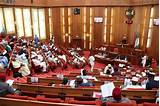
In every constitutional democracy, the legislature symbolizes law, order, and justice. It is not merely a law-making body; it is also the guardian of a nation’s democratic values and institutional integrity. Sadly, recent events within Nigeria’s Senate have cast a shadow over these democratic ideals, particularly in light of the Senate’s flagrant defiance of a valid court order concerning Senator Natasha Akpoti-Uduaghan.
Senator Natasha, elected to represent Kogi Central Senatorial District under the platform of the People’s Democratic Party (PDP), was suspended from the Senate for six months on grounds widely viewed as politically motivated. In line with democratic and legal principles, she sought redress at the Federal High Court, which delivered a landmark ruling ordering her reinstatement, provided she complied with two conditions: offering an apology and paying a prescribed fine. Senator Natasha, in full compliance with the court’s directives, met both conditions. Yet, she remains unjustly barred from accessing the red chamber.
This situation begs a critical question: What message is this sending to the Nigerian public? When the very institution entrusted to defend the Constitution and promote the rule of law flagrantly disobeys judicial authority, it sets a dangerous precedent and signals the erosion of democratic order. Are our lawmakers declaring both to the Nigerian people and the global community that court orders can be selectively enforced or outright ignored? Is this truly the legacy they wish to leave behind?
Even more alarming is the conduct of the Senate President, Godswill Akpabio, who reportedly initiated an appeal against the court ruling not as a representative of the Senate through proper institutional procedure, but in his personal capacity. This act raises serious constitutional and procedural concerns. Can the Senate President unilaterally override a valid judicial ruling on behalf of the Senate without formal Senate resolution and representation? If so, what then becomes of our democracy and the principle of checks and balances?
This behavior not only compromises the integrity of the legislative arm but also constitutes a gross violation of the separation of powers one of the fundamental pillars of democratic governance. It cultivates a culture of impunity and deepens public distrust in our institutions. When the law is applied selectively binding on the ordinary citizens but optional for those in power then what remains is not democracy, but tyranny in disguise.
We must not forget that Senator Natasha was democratically elected by the people of Kogi Central. Her continued exclusion from the Senate is not merely an attack on her person it is an assault on the democratic rights and representation of her constituents. It mutes thousands of voices and undermines the very essence of representative democracy.
Even more suspicious is the Senate’s sudden decision to embark on a two-month recess, which neatly coincides with the tail-end of her unlawful suspension further suggesting a calculated effort to prolong her exclusion and deny her access to legislative duties. This reeks of institutional manipulation, vindictiveness, and a blatant abuse of legislative power.
Key Questions Nigerians Must Ask
What kind of precedent are our lawmakers setting for the Nigerian youth and the citizenry at large?
Are Nigerian senators above the law, or immune from compliance with court directives?
What form of leadership undermines the judiciary and disregards its own oath of office?
The world is watching. International observers, democratic institutions, and human rights organizations are closely monitoring how Nigeria upholds judicial authority and democratic accountability. The Senate must come to terms with the reality that it is not above the law. Democracy cannot survive where selective justice, impunity, and institutional disrespect for the rule of law are normalized.
As a stakeholder in Nigeria’s democratic journey, I hereby call on civil society groups, the media, and all conscientious Nigerians to stand in defense of our judiciary and the rule of law. The Senate must be compelled to comply with the court’s judgment and allow Senator Natasha Akpoti-Uduaghan to resume her constitutional duties without further obstruction or delay.
Furthermore, it is crucial to clarify a matter of public misrepresentation: the apology demanded by the court was specifically directed to the court itself, not to the Senate or its leadership. This was due to a prior satirical letter issued by Senator Natasha despite the court’s standing order that parties should refrain from making public statements written or verbal regarding the matter. The apology was not an admission of wrongdoing to Senate President Akpabio or his circle of enablers. Unfortunately, this legal nuance was deliberately twisted by some including a randy and shameless, supposed married woman from Bayelsa State, who attempted to politicize the issue and malign Senator Natasha on national television. In doing so, she only succeeded in embarrassing herself before a national audience. The public deserves to know the truth.
Conclusion: A Legacy at Stake
Our senators must now choose the legacy they intend to leave behind: that of patriotic legislators who defended the Constitution and the rule of law, or that of political opportunists who undermined democracy for selfish interests.
History will judge them harshly or honorablybased on the choices they make today.
Prince Amb (Dr) Adedipe Dauda Ewenla
PDP Southwest Ex-officio