Oyo 2027: Narratives, Numbers, and the Race to Replace Makinde
…How zoning, religion, and internal PDP crisis are shaping the race for the next governor
As the countdown to the 2027 governorship election begins in Oyo State, the question of who succeeds Governor Seyi Makinde is no longer a distant conversation, it is a defining political puzzle unfolding within a deeply fractured Peoples Democratic Party (PDP).
What should ordinarily be a smooth transition for a ruling party is now complicated by a dual-layer crisis: internal divisions at the national level of the PDP and emerging factional alignments within Oyo State itself.
At the center of this evolving drama is Governor Makinde, whose political machinery and influence are expected to play a decisive role in shaping the party’s eventual flagbearer.
Yet, even within his camp, uncertainty looms.
A Party in Crisis, A State in Contest
The PDP’s lingering national crisis, marked by leadership disputes, ideological fractures, and weakened cohesion, has cast a long shadow over state chapters of the party.
In Oyo, this has translated into subtle but significant cracks within the party structure, as stakeholders begin to position themselves ahead of 2027.
Against this backdrop, the plan rumored slated for 7th of April 2026, “consensus arrangement” reportedly being fine-tuned within Makinde’s faction has become a subject of intense speculation.
Will the governor anoint a successor, or will competing ambitions fracture the camp he has carefully built?
The stakes are high, a mismanaged transition could weaken the PDP’s grip on Oyo, opening the door for opposition resurgence.
The Aspirants and the Battle of Narratives
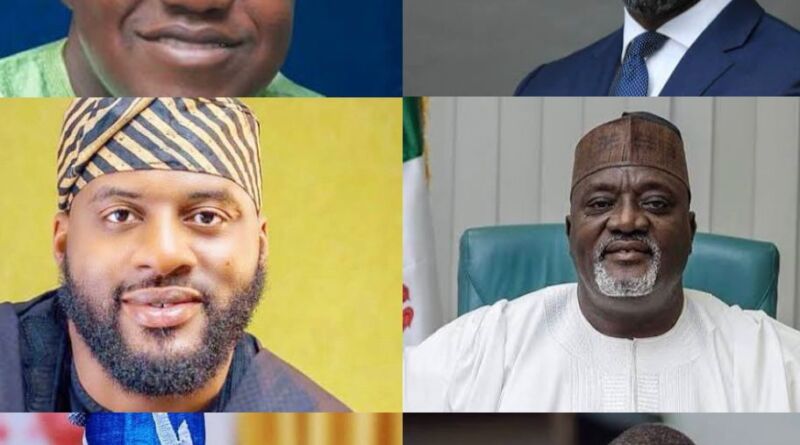
Even before formal declarations, a crowded field of aspirants has emerged, each carrying not just political credentials but also carefully constructed or strategically imposed narratives.
Bimbo Adekanmbi is widely seen as
As a relatively recent entrant into the party, having defected from the All Progressives Congress (APC) after the 2023 general elections, he is still widely regarded by party faithful as an outsider.
This perception has led many within the PDP to consider his chances of securing the governorship ticket as slim.
However, a different narrative is emerging among some political analysts.
They argue that his growing proximity to power, evidenced by his appointment by Governor Seyi Makinde as Chairman of the committee overseeing the renovation of Ladoke Akintola International Airport, Ibadan, could signal a strategic positioning within the governor’s inner circle.
For these observers, such a role is not merely administrative but potentially indicative of trust, visibility, and possible endorsement ahead of the 2027 succession race.
However, critics frame this same strength as a liability, arguing that his emergence could signal stagnation at a time when voters are increasingly demanding innovation.
For Nureni Adeniran, the conversation revolves around scale. While he commands respect at the grassroots level, questions persist about whether his influence can stretch across the complexities of statewide governance.
His candidacy is thus framed as strong locally, but potentially limited in broader appeal.
A different dynamic surrounds Adebo Ogundoyin, whose youth and energy inject vibrancy into the race.
Yet, opponents have been quick to recast these qualities as signs of inexperience, raising doubts about his readiness to manage the political and administrative weight of Oyo State.
He also hails from a minority zone within the state, a factor that could weigh against his chances of emerging as a leading contender, given the sensitive dynamics of zoning in Oyo politics.
In addition, his religious background as a Christian has been cited by some critics who argue that the governorship should rotate to a Muslim candidate, further complicating his path to the top of the succession list.
While his late father was a prominent and widely respected figure in the Ibarapa zone, that legacy may not be strong enough to override the structural and political considerations tied to his place of origin.
In a contest where regional and religious balancing often shape outcomes, these factors could ultimately limit his prospects of becoming the governor’s preferred candidate.
Technocratic competence defines Stanley Adedeji Olajide, but even this becomes a double-edged sword.
His intellectual depth is sometimes portrayed as detachment, feeding a narrative that he may struggle to connect with grassroots voters who prioritize accessibility over abstraction.
For Adebo Akande, throughout the life of the current administration, projected himself more as an administrator than a partisan actor, a posture that has raised concerns among some stakeholders about his depth of engagement with party structures.
Critics argue that this perceived detachment from core party activities could affect his acceptability among PDP faithful, for whom loyalty and consistent participation in party affairs remain key considerations.
Additionally, his religious background has entered the conversation.
As a Christian, like the outgoing governor, Engr. Seyi Makinde, some analysts note that this could become a factor in the succession debate, amid arguments in certain quarters that power should rotate to a Muslim candidate.
Taken together, these dynamics may pose significant challenges to his prospects of emerging as Governor Makinde’s preferred successor.
Meanwhile, Beulah Adeoye enters the race under the lens of representation. While his candidacy speaks to inclusivity, detractors risk reducing it to symbolism, potentially overshadowing substantive policy contributions.
For Beulah, critics acknowledge his youth and intellectual strength, projecting him as a promising figure in the race. However, his origin from Oke-Ogun, a minority zone within the state, is seen as a potential limitation, particularly within the context of Oyo’s zoning considerations.
Questions have also been raised about the depth of his popularity even within his home base, leaving uncertainties about his grassroots strength.
In addition, his religious background has been factored into the broader succession debate, with some analysts arguing that both regional and religious dynamics could weigh against his chances.
Taken together, these concerns continue to shape the narrative that his path to emerging as Governor Seyi Makinde’s successor may face significant hurdles.
Taofeek Arapaja, a seasoned political figure, faces a different kind of framing.
His experience is acknowledged, but critics suggest his focus may be too narrowly defined, particularly around economic issues, raising concerns about a holistic governance approach.
The case of Segun Ogunwuyi highlights another recurring theme in Oyo politics: the balance between competence and political structure.
Though widely regarded as capable, he is perceived as lacking the grassroots machinery necessary for electoral success.
For Olufemi Ajadi, ambition is not in doubt.
Some critics dismiss Ajadi as a political outsider, pointing to his previous governorship bid in Ogun State under the NNPP as evidence of inconsistency and a lack of clear political direction.
To them, his decision to now seek relevance in Oyo State raises questions about his understanding of the local political landscape.
Within the Peoples Democratic Party (PDP) in Oyo State, Ajadi’s influence is considered minimal.
While he may be known within certain circles, he is largely viewed as a newcomer with limited political footing.
Coupled with his relative inexperience in the state’s political structure, these factors are seen as significant constraints that could hinder his chances of emerging as a leading contender to succeed Governor Seyi Makinde.
Finally, Femi Babalola presents a profile rooted in principle and legal discipline.
Yet, this has been reframed by critics as rigidity, raising questions about his ability to navigate the compromises that define political leadership.
Makinde’s Calculus: Kingmaker or Consensus Builder?
At the heart of these competing ambitions lies Governor Makinde’s political calculation.
His influence within Oyo PDP remains formidable, but the broader crisis within the party complicates any straightforward succession plan.
If a consensus candidate emerges from his faction, it could consolidate power and present a united front.
However, any perception of imposition may deepen internal resentments, triggering defections or parallel loyalties.
Conversely, an open contest risks exposing divisions that could weaken the PDP ahead of the general election.
Beyond 2027: The Battle for PDP’s Soul in Oyo
More than just a governorship race, the unfolding contest is a referendum on the future direction of the PDP in Oyo State.
Will the party embrace renewal or cling to established structures?
Can it reconcile internal differences while presenting a credible
alternative to voters?
In this high-stakes environment, narratives have become political currency.
Each aspirant must not only build a campaign but also dismantle the perceptions that threaten their viability.
As Oyo moves closer to 2027, one thing is clear: the path to Agodi Government House will not be decided solely by popularity or performance, but by strategy, alliances, and the delicate art of managing perception within a party fighting to redefine itself.