Oyo State Takes Charge of Power Sector, Enforces New Electricity Regulation
… IBEDC and other operators must obtain licenses as state strengthens oversight
…As OYSERC assumes full control as Sangodoyin promises 24-hour response to complaints
The Chairman of the Oyo State Electricity Regulatory Commission (OYSERC) and Commissioner for Energy, Prof. Dahud Sangodoyin, has reaffirmed the Commission’s exclusive authority to regulate electricity activities within the state.
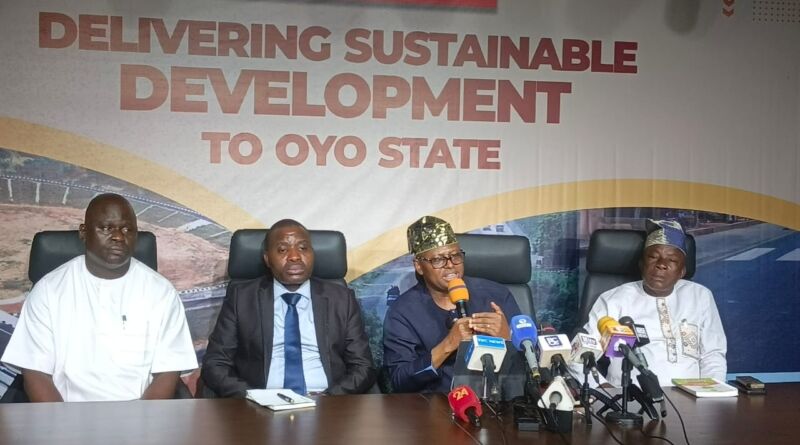
Speaking during a press briefing at the Governor’s Office in Ibadan, Sangodoyin stated that OYSERC is now the sole body empowered to oversee electricity generation, distribution, and consumer protection across Oyo State.
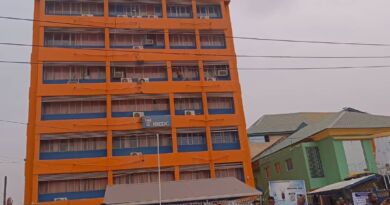
He emphasized that all electricity operators, including the Ibadan Electricity Distribution Company (IBEDC), must obtain proper licensing from the Commission to operate within the state.
According to him, residents experiencing issues related to electricity supply, consumption, or tariffs are encouraged to channel their complaints directly to the Commission.
“The Commission has been established by His Excellency to address all electricity-related concerns. We assure the public that complaints will be attended to promptly, with responses provided within 24 hours,” he said.
Sangodoyin disclosed that the Commission has already commenced operations, with support from the Nigerian Electricity Regulatory Commission (NERC), which has released transitional regulatory funding to facilitate its activities in the first quarter of 2026.
Highlighting key initiatives, the Commissioner pointed to the ongoing Ibadan Independent Power Project, a 12-megawatt initiative designed to supply electricity to critical infrastructure in the state capital.
Facilities expected to benefit from the project include the State Secretariat, Government House, Oyo State Broadcasting Corporation (BCOS), judiciary complexes in Iyaganku, Lekan Salami Stadium at Adamasingba, Adeoyo Teaching Hospital, and major street lighting networks within central Ibadan.
He noted that the project is already making an impact, particularly in improving power supply and supporting public infrastructure.
In addition, the state government is implementing solar-powered street lighting across major areas such as Agbarigo, Eleyele, Aleshinloye, and Dugbe, with plans to expand the initiative statewide.
Sangodoyin explained that the power projects are expected to reduce operational costs for government institutions, stimulate business growth, and enhance economic activities along key corridors.
“We are bringing electricity governance closer to the people.
Unlike before, when complaints had to be forwarded to Abuja, residents can now engage directly with the Commission.
Petitions are reviewed on the last Thursday of every month,” he said.
He added that the Commission now has the authority to enforce electricity regulations locally, monitor operators, and attract investors into the state’s power sector.
Looking ahead, the Commissioner expressed confidence that Oyo State will generate between 15 and 20 megawatts of additional power within the next few quarters, alongside ongoing development of a state bio-energy plant.
He reiterated the government’s commitment to building a sustainable energy future that will drive economic growth and improve living standards.
“Our goal is to deliver reliable, affordable, and sustainable energy, positioning Oyo State as a leader in sub-national electricity market development in Nigeria,” he said.
Sangodoyin also revealed plans to expand electricity access across all zones of the state, including Ibarapa, Oyo, Ogbomosho, Oke-Ogun, and Ibadan zones.
He disclosed that investors are already showing interest in deploying solar embedded generation and mini-grid solutions in underserved areas, particularly in the Ibarapa zone.
Feasibility studies, he said, will soon commence to determine suitable locations for these projects.
While efforts are ongoing to address challenges with the national grid in collaboration with federal authorities, the Commissioner stressed the state’s focus on developing its own sub-national electricity framework.
“We are taking control of our energy future by developing localized solutions that meet the specific needs of our people,” he added.