French Language, Regional Solidarity Key to Nigeria’s Growth—Alliance Française Director
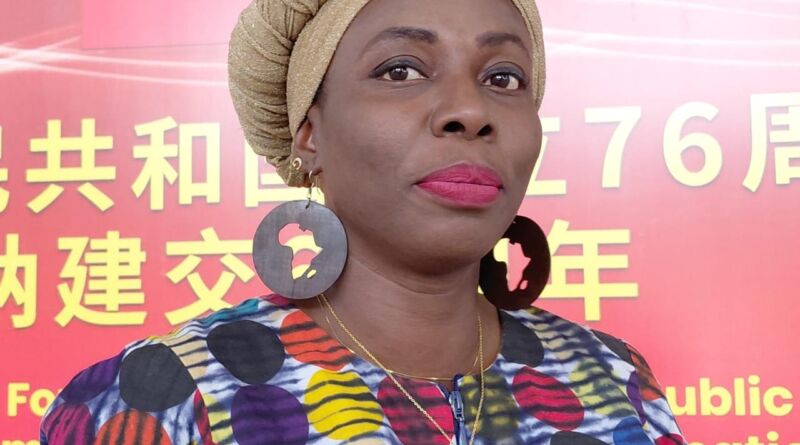
Olaide Turner-Moyet is the Director of Alliance Française, Ibadan, a multidisciplinary artist, educationist, entrepreneur and Pan-Africanist,her approach blends language acquisition with cultural immersion, using art, music, and community engagement as key tools.
She talked about how art, language can shape identity, inspire unity, and rewrite the narrative of a nation,vision for regional cultural exchange, the role of women in leadership among others. Excerpts.
What is your vision for Alliance Française Ibadan now as a director in the next few years?
Alliance Française merges art, culture, and language, all things I am deeply passionate about. My goal is to make people learn French the French way, make French learning more engaging through games, mnemonics, and other interactive tools. I want language acquisition to be joyful and accessible. Beyond language, we’re creating a vibrant cultural space with exhibitions, art talks, artist residencies, workshops, and exchanges. I envision stronger connections across West Africa, where we welcome artists from neighbouring countries and also showcase Nigerian artists abroad. It’s about building regional solidarity through culture.
What’s your take on Nigerians being receptive to learning French?
Very receptive! I recently attended the National Association of French Teachers Conference, and it was inspiring. These educators are like soldiers, passionately spreading the message of French language education in their communities. At Alliance Française Ibadan, we also customise learning for professionals and students. We are an examination centre for various international examinations DELF – DALF, TCF, TEF especially important for people migrating to Canada or Francophone countries
Do you think is important to promote French in an Anglophone country like Nigeria?
It is important because Nigeria is surrounded by Francophone nations, Benin, Togo, Cameroon, Niger, Chad, Mali. French is our second official language.
Mastery of French is not just about cultural exposure, it’s crucial for trade, medicine, tourism, diplomacy, and regional cooperation.
Language is power. If we want to lead and collaborate in West Africa, we must be able to communicate in both English and French.
How can art help change the country’s story?
Art is powerful, from storytelling and poetry to visual art and documentaries, it allows us to reflect, question, and re-imagine. We must ask: Who were we? Who are we now? Who do we want to become? If we’re unhappy with what we see, art can help us tell a new story, one built on integrity, creativity, and community. Nigeria belongs to all of us, “everybody and nobody.”
The transformation begins with each one of us. The world is changing fast. Yes, there’s a lot to learn online, but beyond knowledge, build character.
Be people of integrity. Work smart, not just hard. Working smart means seeking solutions, thinking creatively, and living meaningfully, not just chasing materialism. Live a life that matters.
Do you have any working relationship with the French Embassy?
Absolutely. The French Embassy is the key promoter and supporter of all Alliance Française centres in Nigeria.
They established the framework which we use.
They are instrumental in our work promoting French language and Francophone culture. Without their stewardship, none of these would be possible.
You work with people using art as a tool for change ,does this inspire the work you do today?
Absolutely. I see it as a lifelong path, one I’ve been gently directed to from childhood. Growing up, I was surrounded by art: drawings, paintings, and performance art were just part of our everyday life.
We never considered it extraordinary; it was simply how we played, learned, and bonded. But as I grew older, life steered me toward career choices that seemed detached from my passion.
Over time, I realised that to succeed in any field, you need to be an artist in some way, creative, intuitive, and capable of channeling your experiences into meaningful work. So yes, art has always been the heartbeat behind everything I do.
What was your initial career path before this new role at Alliance Française?
My career journey has been quite eclectic. I’ve never been someone to stick with just one thing for decades. I’ve taught at different levels, primary, secondary, and adult education.
I’ve also worked as a translator and interpreter, and at one point, I ran a business that was deeply rooted in the arts.
Throw more light on that business?
It was all about promoting African textiles and crafts, Adiré, Batik, and Aso-oke. I ha pop-up shops and would bring together people who appreciated African fabrics and handmade beaded accessories. I sourced materials from Nigeria and sold them in the Republic of Benin, where the appreciation for African craftsmanship was often even stronger than back home.To this day, friends residing in different parts of the world send me photos of the fabrics and home items they bought from me over a decade ago. It was more than business. It was cultural storytelling through textiles.
What subjects were you teaching in your years as an educator?
I taught English, Literature,Government, Social Studies, Christian Religious Studies and French. Interestingly, I also taught sports in English at a Frecnch School – EFE Montaigne in the Republic of Benin, helping Francophone students learn English through physical education, combining language and movement.
What was your discipline at the initial stage?
I earned my first degree in Classical Studies from the University of Ibadan. Later, I pursued French for three years in Benin Republic, continued studying at Leeds City College, School of Creative Arts in the United Kingdom, and also obtained qualifications in Social Work, Autism, and Learning Disabilities.
What does it mean to you as a woman leading a cultural institution?
I don’t lead because I’m a woman. I lead because I’m human, driven by empathy, love, and purpose. But yes, I acknowledge that as a woman, my nurturing instincts influence my leadership style. I want to see everyone in this space thrive, grow, and feel safe.
What advice do you have for women in leadership,young women who want to lead?
Women are divine beings, we carry life, not just physically but ideologically.
Leadership for women should mean nurturing visions, birthing ideas, and protecting what matters in society.
So, to women in leadership or aspiring to be: embrace your gift. Use it to create impact, uplift others, and heal broken systems.
The journey will not be easy.
But every experience, good or bad, is shaping you into a leader with depth, resilience, and compassion. Embrace your story.
Learn from it. And when your moment to lead comes, you’ll lead with wisdom and empathy.