
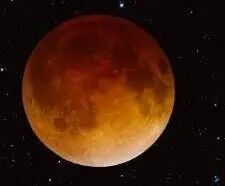
Nigeria will witness a lunar eclipse today, 7th of September
Nigeria and Global Spectators Gear Up for a Stunning Lunar Eclipse on September 7, 2025
Today Sunday, September 7, 2025, skywatchers in Nigeria and dozens of other nations across the globe will be treated to a celestial spectacle: a total lunar eclipse.
This awe-inspiring event, set to unfold over approximately 83 minutes starting around 8:00 PM Nigerian time (WAT), promises to captivate audiences across Africa, Europe, the Americas, and parts of Asia and Australia. For Nigerians and residents of neighboring countries like Ghana, Cameroon, and São Tomé and Príncipe, this lunar eclipse offers a unique opportunity to witness the Moon transform as Earth’s shadow envelops it, creating a dramatic display in the night sky.
Here’s everything you need to know about this celestial event, its significance, and how to make the most of it.
What is a Total Lunar Eclipse?
A lunar eclipse occurs when the Sun, Earth, and Moon align in space, with Earth positioned between the Sun and the Moon. During this alignment, Earth casts its shadow onto the Moon, temporarily darkening it and sometimes giving it a striking reddish hue, often referred to as a “Blood Moon.”
This phenomenon happens because some sunlight passes through Earth’s atmosphere, which scatters shorter blue wavelengths and allows longer red wavelengths to reach the Moon’s surface.Unlike a solar eclipse, which requires special eye protection, a lunar eclipse is completely safe to view with the naked eye, binoculars, or a telescope. This makes it an accessible and family-friendly event for astronomy enthusiasts and casual observers alike. The September 7, 2025, eclipse is particularly exciting because it will be visible across a wide swath of the globe, including most of Africa, where clear skies could offer unobstructed views of the entire event in many regions.
When and Where to Watch in Nigeria
In Nigeria, the lunar eclipse is expected to begin around 8:00 PM WAT on September 7, 2025, and last for approximately 83 minutes. The event will progress through several stages:
Penumbral Phase: The Moon enters Earth’s outer, lighter shadow, causing a subtle dimming that may be hard to notice.
Partial Phase: Earth’s darker umbral shadow begins to cover the Moon, creating a dramatic “bite” effect.
Totality: The Moon is fully engulfed in Earth’s shadow, often taking on a reddish or coppery glow.
Reverse Phases: The Moon exits the umbral and penumbral shadows, gradually returning to its normal brightness.
While most of Nigeria will have a front-row seat to the entire eclipse, the westernmost regions of the country may miss parts of the early penumbral or partial phases. This is because the Moon may rise closer to or during totality in these areas, limiting visibility of the initial stages. To maximize your viewing experience, aim to find a location with a clear view of the eastern horizon, free from tall buildings or trees.
Global Visibility and Affected Regions
The September 7, 2025, lunar eclipse will be visible across a vast portion of the world, making it a truly global event. In Africa, countries such as Nigeria, Ghana, Cameroon, Gabon, Equatorial Guinea, Benin, Togo, Niger, Chad, and São Tomé and Príncipe are among those expected to witness the eclipse. Most of these regions will enjoy visibility of the entire event, though, like western Nigeria, some westernmost areas may see the Moon rise during later stages, missing the early phases.
Beyond Africa, the eclipse will also be observable in parts of Europe, North and South America, Asia, and Australia, depending on local time zones and Moonrise times. For instance, in Europe and the Americas, the eclipse may occur earlier in the evening or late at night, while in parts of Asia and Australia, it may be visible in the early morning hours of September 8, 2025. This broad visibility makes the event a shared experience for millions, uniting people across continents in their appreciation of the cosmos.
Tips for Viewing the Lunar Eclipse
To make the most of this celestial event, here are some practical tips for Nigerian skywatchers and others in the region:
Check the Weather: Clear skies are essential for optimal viewing. Check local weather forecasts for September 7, 2025, and choose a location with minimal cloud cover. Coastal areas like Lagos or Port Harcourt may experience variable weather, so inland locations like Abuja or Enugu could offer better conditions if clouds are a concern.
Find a Dark Location: Light pollution from cities can dim the Moon’s appearance, especially during the subtle penumbral phase. If possible, head to a rural area or a spot away from streetlights and urban glow. Parks, open fields, or rooftops with unobstructed views are ideal.
Bring Viewing Aids (Optional): While the eclipse is safe to view with the naked eye, binoculars or a telescope can enhance details, such as the Moon’s craters or the reddish hue during totality. Even a smartphone camera can capture decent images, especially if you use a tripod to stabilize it.
Dress for the Evening: September evenings in Nigeria can be warm, but if you’re observing for the full 83 minutes, bring a light jacket or blanket, especially in higher-altitude areas like Jos. Comfortable seating, like a folding chair or picnic blanket, can also make the experience more enjoyable.
Involve Friends and Family: A lunar eclipse is a perfect opportunity to gather loved ones for a shared experience. Consider hosting a small viewing party with snacks and drinks to celebrate this natural wonder. Educational discussions about the Moon and space can make it fun for kids and adults alike.
Track the Timing: The eclipse’s stages will unfold over several hours, with totality lasting about 83 minutes. Set a reminder for around 7:30 PM WAT to settle in and catch the early phases. If you’re in a western region, confirm the Moonrise time for your specific location to avoid missing the peak.
The Science and Cultural Significance of Lunar Eclipses
Lunar eclipses have fascinated humanity for millennia, blending science, culture, and mythology. Scientifically, they offer a chance to study Earth’s atmosphere, as the reddish color during totality reveals how sunlight is filtered through our planet’s atmospheric layers. For astronomers, eclipses provide insights into the Moon’s orbit and Earth’s shadow dynamics, contributing to our understanding of celestial mechanics.
Culturally, lunar eclipses hold varied meanings across African traditions and beyond. In some Nigerian communities, eclipses were historically seen as omens or spiritual events, prompting rituals or storytelling. For example, among the Yoruba, celestial events might be interpreted through folklore, while the Igbo might associate them with natural cycles. Today, these cultural perspectives blend with modern scientific appreciation, making lunar eclipses a bridge between tradition and discovery.
Globally, lunar eclipses have inspired myths and legends, from dragons devouring the Moon in ancient China to deities altering the heavens in Indigenous American stories. The September 2025 eclipse offers a chance to reflect on this shared human heritage while marveling at the precision of modern astronomy.
Why This Eclipse Matters
The September 7, 2025, lunar eclipse is more than just a beautiful display—it’s a reminder of our place in the universe. For Nigerians and others across Africa, it’s an opportunity to connect with the cosmos without needing specialized equipment or expertise. The event’s accessibility makes it a unifying moment, encouraging people of all ages and backgrounds to look up and wonder.Moreover, this eclipse comes at a time when interest in space exploration is surging.
With missions to the Moon and Mars making headlines, events like lunar eclipses inspire the next generation of scientists, engineers, and dreamers. In Nigeria, where STEM education is gaining momentum, such events can spark curiosity and drive innovation in fields like astronomy and space science.
Looking Ahead: Future Celestial Events
If you miss the September 7, 2025, lunar eclipse or want to plan for more skywatching, keep an eye out for future events. Lunar eclipses occur a few times a year, though not all are total or visible in every region.
The next total lunar eclipse visible in Nigeria is expected in 2026, so mark your calendars and stay tuned for updates from astronomical organizations or apps like Stellarium or SkySafari.In the meantime, you can prepare for other celestial events, such as meteor showers (e.g., the Perseids or Geminids) or planetary conjunctions, which are often visible from Nigeria. Joining a local astronomy club or following organizations like the Nigerian Space Research and Development Agency (NASRDA) can keep you informed and connected to the stargazing community.
Conclusion
The total lunar eclipse on September 7, 2025, is a must-see event for Nigerians and millions of others across Africa and beyond. Starting around 8:00 PM WAT and lasting approximately 83 minutes, this celestial show promises to deliver a breathtaking display of Earth’s shadow dancing across the Moon. Whether you’re in Lagos, Accra, Yaoundé, or São Tomé, take a moment to step outside, look up, and witness the beauty of the cosmos. Safe, accessible, and awe-inspiring, this lunar eclipse is a chance to connect with nature, science, and humanity’s timeless fascination with the stars. So grab a chair, invite your loved ones, and get ready for an unforgettable night under the African sky.